We have all been there. You walk into a high-end boutique, and the air hits you with this sophisticated, perfectly balanced aroma that feels expensive and welcoming. You rush home, spend forty dollars on a jar candle labeled "Mahogany Teakwood," and light it. Three hours later, the room smells like… nothing. Or worse, it smells like a generic, sweet chemical fog that gives you a headache.
The issue is not necessarily the quality of the candle, though price does not always guarantee performance. The problem is the reliance on a single source. In 2026, the standard for a luxe home atmosphere has shifted from simply "having a nice smell" to curating an olfactive landscape. Just as you would not light a room with a single bare bulb, you should not scent a room with a single product. Scent layering is the technical solution to the generic, fading fragrance problem, and it relies on understanding how different scent carriers interact with the air.
The Trap of the Single-Note Candle
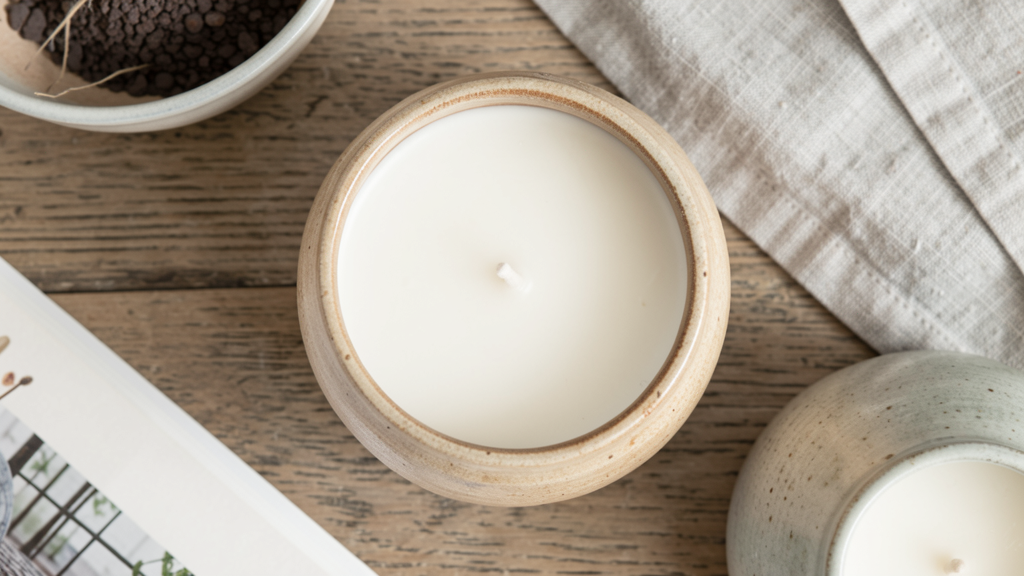
A candle, no matter how high-end, is physically limited. It relies on heat to melt wax and release fragrance oil into the air. This process creates a "hot throw" that is strong but localized. If you place it in a drafty corner, the scent dissipates before it reaches the seating area. Furthermore, our noses are remarkably good at adaptation. After about twenty minutes of exposure, olfactory fatigue sets in, and you stop smelling the candle entirely, even if it is still burning strongly for your guests.
This is where the frustration sets in. You buy a product expecting a permanent transformation of your space, but you get a temporary, localized burst of fragrance that vanishes the moment you blow the flame out. To achieve a continuous, enveloping atmosphere, you need to stop relying on one product to do the heavy lifting and start thinking in terms of "scent pillars."
Understanding Olfactory Volatility
To layer effectively, you must respect the volatility of different fragrance notes, a concept perfumers have used for centuries. Top notes are light and evaporate quickly—citrus, light herbs, and ozone. Middle notes, or heart notes, are the core of the fragrance—florals, spices, and softer woods. Base notes are heavy and lingering—amber, musk, vanilla, and deep woods.
When we layer home scents, we are essentially trying to mimic a fine eau de parfum where these notes unfold over time, rather than hitting you all at once. The mistake most people make is buying three different products that all smell like "Clean Linen" and hoping for the best. Instead, you want to select products with complementary but distinct scent profiles that occupy different volatility weights.
I often discuss this balance with clients who are struggling with the 5 subtle decor mistakes that make your living room look smaller. Just as visual clutter can shrink a room, olfactory clutter—caused by too many competing single-note candles—can make a space feel suffocating and small. The goal is expansion through depth, not volume through quantity.
The Three-Pillar System
I recommend a triad structure to build a robust fragrance profile for any room. This system ensures that there is always a scent active, covering the times when other elements are dormant.
1. The Foundation: The Reed Diffuser
This is your base note. A reed diffuser works 24/7 without heat or electricity. It provides a low-level, constant background hum of fragrance. For this pillar, choose a scent with "heaviness." Woods, resins, or musks work best here because they are less aggressive and last longer. In my own apartment, I use a sandalwood and cardamom diffuser in the hallway. It is subtle, but it creates a baseline that makes the rest of the home feel dressed.
2. The Burst: The Room Spray
This acts as your top note. Candles take time to heat up, but a room spray delivers an instant impact. Use this right before guests arrive or when you transition a room from "day mode" to "evening mode." Because the scent dissipates quickly, you can afford to be adventurous here. A fig leaf or sharp bergamot spray can reset the atmosphere instantly. If you are working from home, a quick spritz of peppermint or rosemary can mimic the focus required for a productive WFH desk setup, clearing the mental fog just as good lighting clears the visual shadows.
3. The Warmth: The Candle
The candle is the bridge. It adds the middle notes but, more importantly, it adds the psychological element of warmth and light. When selecting a candle for layering, look for profiles that bridge the gap between your diffuser and your spray. If your diffuser is woody and your spray is citrus, a candle with a floral or herbal character can tie them together.
A Case Study: The "Winter Library" Profile
Let us put this theory into practice with a specific example I deployed last November for a client in a historic brownstone. The goal was a cozy, intellectual vibe that wasn't cloying.
- The Foundation (Diffuser): We placed a Vetiver and Oakmoss diffuser on a low shelf. This is earthy, dark, and damp. It smells like old books and the forest floor.
- The Burst (Spray): We used a Leather and Tobacco room spray. This sounds intense, but because it is only in the air for ten minutes, it adds a raw, masculine edge that evokes worn armchairs.
- The Warmth (Candle): On the mantle, we burned a candle scented with Baked Clove and Orange.
The result was not a smell of "Leather" or "Orange." It was a complex, shifting aroma. When you walked in, the bright spice of the candle hit you first. As you sat down, the leather spray settled, and eventually, the steady, earthy base of the vetiver grounded the room. It felt lived-in and curated, avoiding the "soap aisle" effect of generic plug-ins.
There is a fascinating parallel here to the debate between maximalism vs minimalism. While visual maximalism relies on accumulation, olfactory maximalism relies on harmonious layering. You are adding depth, not clutter.
Managing Intensity and Volume
The trade-off with this technique is cost and maintenance. Running three systems in one room requires more initial investment than a single candle. However, the efficiency is higher. Your candle burns slower because you do not need it to fill the whole room; it just needs to contribute its layer. Your diffuser oil lasts longer because it is not the sole source of fragrance.
Be wary of crossing the streams. If you have a heavy floral diffuser, do not light a heavy floral candle. You will end up with a cloying sweetness that feels stale. Stick to the rule of complementary families. Woody goes well with Citrus. Spice goes well with Woods. Floral goes well with Green or Herbal notes.
Scent layering is ultimately about control. It moves you from a passive consumer of fragrances—buying whatever is on display at the checkout counter—to an active composer of your home's atmosphere. It takes a bit of experimentation, but the result is a home that feels distinctly, undeniably yours. When you find the right combination, you stop noticing the individual products and start noticing the feeling of the space itself. That is the true definition of luxury.