Editorial image illustrating The $200 Rental Bathroom Glow-Up Without a Single Drill Hole
On March 3rd, 2026, I stood in the center of my new apartment’s bathroom and felt my heart sink. It was a textbook "beige box" nightmare: cracked ceramic floor tiles, a vanity missing half its hardware, and a medicine cabinet that smelled faintly of damp wood. The lease, which I had signed twenty minutes prior, contained Clause 4B in bold red font: “Tenant shall not affix any nails, screws, or permanent adhesives to walls, ceilings, or floors.”
I was staring at five years of paying premium rent for a space that looked like a hospital waiting room from 1998. My options, according to conventional wisdom, were limited. I could accept the ugliness, or I could buy freestanding units that would clutter the already tight floor plan.
I chose a third path. I decided to treat the bathroom as a pop-up installation rather than a permanent renovation. Over the next weekend, using nothing but high-tension rods and heavy-duty removable adhesives, I overhauled the room. The total cost was $217. The result looks like a high-end boutique hotel bathroom. Here is the breakdown of how I did it, and why the "no-drill" limitation actually forced better design decisions.
The "Beige Prison" Dilemma
The problem wasn't just aesthetic; it was functional. The bathroom measured a generous 5 by 7 feet, but it had zero storage. No towel bars, no shelves, just a sad recessed niche above the sink that barely held a toothbrush holder.
I needed storage desperately, but every freestanding cart I looked at chewed up valuable floor space. I looked at 5 subtle decor mistakes that make your living room look smaller and realized the same principle applies to bathrooms: floor clutter makes a small room feel microscopic. I had to go vertical.
The landlord’s ban on drilling eliminated the standard solution: wall-mounted shelves. This forced me to reconsider the architecture of the room. Where were the pressure points? Where could I create force without damaging the substrate?
The answer was the shower alcove and the window frame. These structural elements provided the anchor points for my revolution.
Turning a Shower Nook into a Pantry
I bought three industrial-grade tension rods. Two were standard curtain rods, 26 to 42 inches; the third was a heavy-duty stainless steel rod meant for closet organization.
I installed the third rod vertically inside the shower stall. I tensioned it between the floor and the ceiling tile, placing it tight against the wall in the corner, just outside the direct spray of the showerhead. This created a free-standing floor-to-ceiling pole without a single screw.
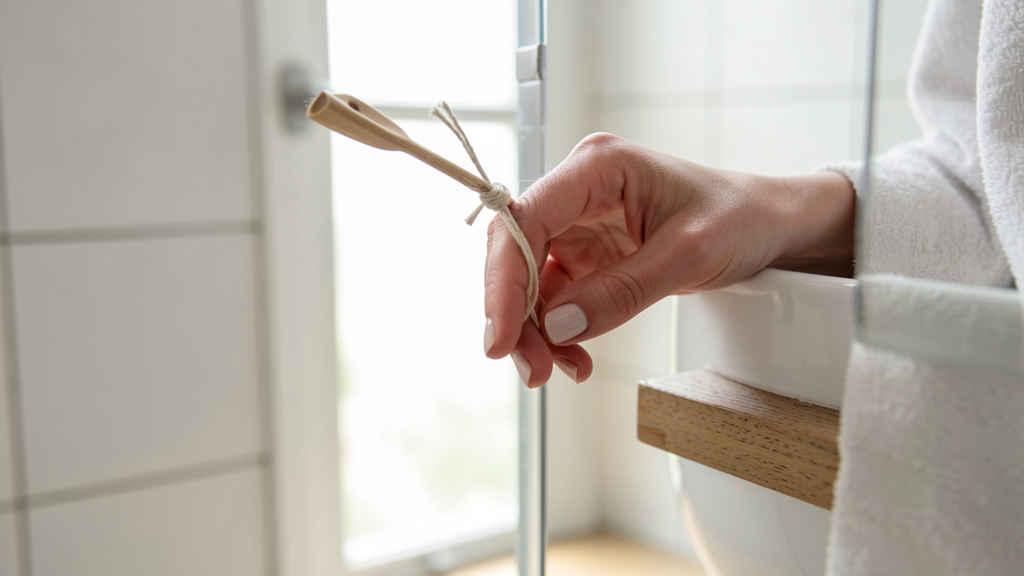
I then attached heavy-duty S-hooks to the rod and hung three wire baskets. Suddenly, I had a three-tier shelving unit for shampoo, conditioner, and body wash. It reclaimed the built-in niche for higher-value items like face serums and perfumes.
For the window, I installed another tension rod not for curtains, but for hanging storage. I placed it high across the window frame (the blinds were inside the mount, so this didn't block light) and hung a series of small, clear organizers from it. This became my "lab" station—cotton balls, q-tips, and nail polish removers suspended in mid-air.
The vertical rod trick is the single most impactful change you can make in a rental. It creates storage out of thin air. When I styled these baskets, I thought about the debate of Maximalism vs. Minimalism. I opted for a "structured minimalism"—uniform white bottles and clear containers—because visual chaos in a bathroom feels like dirt. Uniformity makes the vertical storage look intentional, like a built-in feature rather than a hack.
Why Surface Prep Beats Expensive Hardware
Here is the mistake most people make with adhesives: they buy the cheap plastic hooks and stick them to a dusty wall. When the hook falls, they blame the product.
I spent more time prepping the walls than I did installing the hardware. I wiped down the tiles with rubbing alcohol to remove any oily residue. Then, I used a hairdryer to heat the tile surface slightly, which helps the adhesive bond more aggressively.
I purchased a set of brushed nickel adhesive hooks rated for 5 pounds each. I placed two rows of them on the blank wall opposite the vanity. This is where I hang my towels.
The trade-off here is that you must be decisive. You get one shot at positioning these hooks. If you stick it crooked, removing it often tears the drywall paper or takes a chunk of the glaze off the tile. My advice: use a level. Measure twice, press once.
I also applied a full-length peel-and-stick mirror to the back of the bathroom door. These have come a long way in the last few years. The one I bought uses a proprietary polymer adhesive that creates a vacuum seal. It adds depth to the room and provides a full-body reflection that the tiny vanity mirror couldn't offer.
The Illusion of Permanence
The aesthetic danger of tension rods and adhesive hooks is that they can look temporary, like a dorm room setup. The key to making them look "expensive" is material selection.
I avoided white plastic entirely. I chose matte black tension rods and brass-finish hooks. The contrast between the black rod and the white subway tile looked intentional, almost industrial-chic. The brass hooks warm up the space, making it feel curated rather than improvised.
I addressed the lighting situation without touching the wiring. The existing fixture was a dim, yellowing boob light. I couldn't replace it. Instead, I used a peel-and-stick LED motion-sensor light strip under the vanity cabinet. It casts a cool, white glow upward, creating the illusion of under-cabinet lighting. It makes the room feel modern and clean without an electrician.
Finally, I tackled the sensory experience. A beautiful room that smells like old plumbing is a failure. I applied scent layering to the space. I used a diffuser with cedar and sage on the windowsill and placed small sachets of lavender inside the towel cabinet. When you open the door, the scent hits you before you even see the improvements. It validates the visual design.
The Exit Strategy
There is a genuine risk with these methods. When I eventually move out, removing the adhesive hooks will require a hairdryer and dental floss. I will need to heat the adhesive strip until it releases, then slide the floss behind it to cut the bond.
If the landlord has painted over cheap drywall without primer, there is a 20% chance the paint comes off with the hook. This is the gamble of renting. However, a small patch of touch-up paint is infinitely easier to explain—and cheaper to fix—than four drilled holes in ceramic tile.
I have accepted this trade-off because the quality of my daily life has improved disproportionately to the cost and risk. The bathroom is no longer a utility pit I rush through; it is a transition space where I can decompress.
Portable Ownership
We often think of home improvement as an investment in the property, which is why landlords get so nervous about tenants making changes. But by restricting myself to non-invasive methods, I shifted the investment from the building to my standard of living.
When I leave, I will unroll the tension rods and peel off the mirrors. I will take my matte black rods and my storage baskets with me to the next place. I am not renovating a landlord's asset; I am building a portable kit of high-end living. This approach changes the psychology of renting. You stop waiting for permission to be comfortable and start engineering it yourself, within the constraints of the contract. The permanence isn't in the walls; it's in the method.