Editorial image illustrating Stop Washing Your Hair Daily: The Science Behind Training Your Strands
We have all been there. The alarm goes off at 6:30 AM, and the immediate dread sets in—not because of the work ahead, but because of the grooming ritual. For years, my bathroom mirror was the site of a daily battle involving a round brush, high heat, and forty minutes I simply could not afford. The cycle was relentless: wash, blow-dry, style, repeat. By 5:00 PM, my hair would be flat at the roots, urging me to reach for the dry shampoo yet again. It felt like a Sisyphean task.
The beauty industry has conditioned us to believe that "fresh" means "squeaky clean." We equate the stripping sensation of harsh sulfates with hygiene. However, shifting away from daily washing was the single most transformative change I made for my lifestyle in 2026. It is not just about laziness; it is about biology. By understanding the mechanism of sebum regulation, you can actually retrain your scalp to produce less oil, resulting in better texture and significantly more free time.
The Myth that 'Clean' Means 'Stripped'
There is a pervasive misconception that oil is the enemy. We see advertisements showing women with water cascading over their impossibly shiny, detergent-lathered hair, promising a fresh start. The reality is that sebum—that waxy, oily substance produced by the sebaceous glands—is the scalp's primary defense mechanism. It is nature’s conditioner.
When you wash your hair every twenty-four hours, you are signaling to your body that its natural oils are unwanted. The scalp, essentially panicked by the sudden dryness, overcompensates by ramping up production. You strip the oils, the scalp freaks out, and it produces more oil. You wash again to remove that new oil, and the cycle escalates. This creates a dependency cycle that is incredibly difficult to break but entirely manufactured by our own habits.
I experienced this firsthand during a trip to Tokyo last November. Unable to navigate the strict recycling protocols of the hotel bathroom easily, I skipped a wash. To my surprise, my hair didn't turn into a greaseball; it actually held a style better than it had in months. It was the first piece of evidence that my scalp was reacting aggressively to my daily routine.
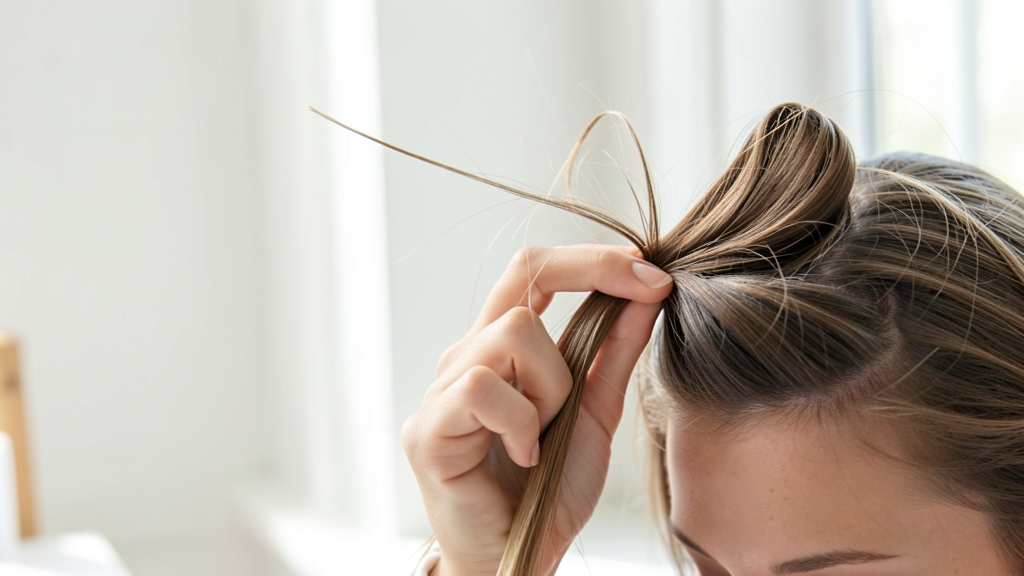
Why Does My Scalp Produce Excess Oil?
To fix the problem, we have to look at the physiology. Sebum is essential for maintaining the skin barrier of the scalp. Without it, the barrier is compromised, leading to inflammation and even dandruff. When we use high-pH shampoos or surfactants that are too strong, we disrupt the acid mantle. This disruption is chemically similar to what happens when we over-exfoliate our faces. If you have ever struggled with fixing a damaged skin barrier by cutting your skincare in half, you know that the solution is usually to stop doing so much. The same logic applies here.
Training your hair is essentially a lesson in restraint. You are teaching the sebaceous glands to slow down. The process involves extending the time between washes incrementally. If you currently wash daily, do not jump to washing once a week immediately. That is a recipe for a miserable month and a clogged shower drain. Start by going one day longer. Wash on Monday morning, skip Tuesday, and wash Wednesday morning.
During this initial phase, the hair will look oily. This is where most people quit. They feel self-conscious, believing the oil is visible to everyone in the boardroom. Here is the truth: most people are too worried about their own lives to notice the sheen on your roots. Furthermore, hairstyles like a sleek low bun or a braided crown disguise oil effectively while protecting the mid-lengths and ends of the hair.
The Three-Week Adjustment Period is Non-Negotiable
Biological changes do not happen overnight. The skin cycle takes roughly 28 days, and you can expect a similar timeline for sebum regulation. The first two weeks are the hardest. By the third week, however, the scalp begins to understand that it doesn't need to flood the zone with oil.
I remember vividly hitting the "panic point" on day four of my second week of training. I felt like my hair was heavy and limp. I almost caved and reached for the shampoo bottle. Instead, I used a boar bristle brush to distribute the oils from my roots down to my brittle ends. The result was shocking. My hair, which usually felt like straw at the tips, suddenly felt soft and pliable. The sebum acted as a natural styling cream, taming frizz without the need for silicone serums.
This texture shift is the real benefit. Daily washing swells the hair cuticle, leading to frizz and mechanical damage from brushing wet hair. When you wash less, the cuticle lies flat. The hair becomes stronger, shinier, and more manageable. You are not just saving time; you are improving the structural integrity of the hair shaft.
Rethinking Styling: Volume and Texture Over Frizz-Free
One of the biggest hurdles in this process is relearning how to style hair that isn't freshly blown out. Freshly washed hair is often "too clean"—it is slippery, lacks grip, and falls flat instantly. Second or third-day hair has grit. It has memory. It holds curls and updos infinitely better.
To make this work, you need the right toolkit. A high-quality dry shampoo is a must, but use it sparingly. Do not spray it on immediately after washing; save it for day three or four. Invest in a silk pillowcase to reduce friction and oil absorption while you sleep. Silk allows the hair to glide, whereas cotton absorbs moisture and can create bedhead that requires heat styling to fix.
This approach to grooming fits perfectly into a broader philosophy of intentional living. Just as we might evaluate the utility of our wardrobe, asking ourselves if trend shopping is truly serving us long-term, we must evaluate our grooming rituals. If a habit consumes forty-five minutes of every day and yields diminishing returns, it is a candidate for elimination.
The Tactical Toolkit for the Transition
If you are ready to reclaim your mornings, here is how you execute the transition without losing your mind:
- The Rinse-Only Method: On non-wash days, hop in the shower and rinse your hair with warm water. Massage the scalp with your fingertips to disperse oil, but do not apply product. This often provides the sensation of freshness without the stripping effect of detergent.
- Cool Water Finish: When you do wash, end with a cold water rinse. This helps to close the cuticle and flatten the hair shaft, locking in moisture and reducing the immediate rebound of oil production.
- Focus Shampoo on the Roots: There is no need to lather the lengths of your hair. The soapy runoff is sufficient to clean the ends. Applying shampoo directly to the mid-lengths and ends only serves to dry them out.
- Condition Before Shampoo ( occasionally): If you have very fine hair that gets weighed down easily, try conditioning the lengths first, rinsing, and then shampooing the roots. This prevents the conditioner residue from lingering on the scalp and causing limpness.
The ultimate goal is not to stop washing forever. It is to gain control. Most people who successfully train their hair find a comfortable rhythm of washing once or twice a week. Imagine what you could do with those extra ten hours a month. That is time for a 3-minute Gua Sha routine, a meditation session, or simply sleeping in a little later.
Our relationship with grooming is often a proxy for how we view ourselves. We strip ourselves bare, scrubbing away natural protection in an attempt to meet an arbitrary standard of purity. But true health—and true style—usually lies in balance. By working with your body's biology rather than against it, you achieve not just better hair days, but a more sustainable and mindful way of living. The blow-dryer is still there when you need it, but it is no longer the master of your schedule.