Editorial image illustrating The Burnout Cure: How I Saved My Skin Barrier (and $120/Month) by Doing Less
On the morning of February 14, 2026, I woke up looking like I had spent the night in a wind tunnel without a coat. My face wasn't just glowing; it was radiating a painful, humid heat. The reflection in the mirror showed a map of angry red patches across my cheeks and a tightness that made smiling physically difficult. I had a dinner reservation that evening, but the thought of putting foundation on the raw, stinging skin was unbearable. I cancelled.
For the past three years, I had been a devout disciple of the "More is More" skincare gospel. My bathroom cabinet looked like a pharmacy Sephora hybrid. I had a vitamin C serum for morning brightness, a glycolic acid toner for texture, a retinol alternate for anti-aging, and a heavy night oil that promised to seal it all in. I was chasing a poreless, glass-skin ideal that, ironically, was getting further away with every new bottle I bought.
I realized then that my rigorous routine wasn't self-care; it was an act of aggression against my own biology. I had chemically burned off my skin barrier.
The Morning My Skin Finally Rebelled
The breaking point didn't happen overnight. It was a slow erosion, but the Valentine's Day disaster was the final alarm bell. I traced the damage back to a specific error in judgment I made two weeks prior. I had read an online forum thread about "stacking" actives for maximum results. The logic seemed sound: use an acid to prep the skin, then follow with a retinoid to accelerate cell turnover.
I applied a 5% lactic acid toner, waited ten minutes, and then followed it up with a strong prescription tretinoin cream my dermatologist had prescribed months ago for fine lines. My face tingled, which I misinterpreted as the product "working." We are conditioned to believe that stinging equals efficacy, but in reality, that sensation is your nerve endings screaming for help.
By the second week, my skin barrier—the protective matrix of lipids and cells that keeps moisture in and irritants out—was decimated. Water was evaporating from my skin faster than I could drink it. The texture became rough and peeling, yet somehow oily and inflamed. I tried to fix the dryness with heavier creams, but the occlusives trapped the heat and irritation, creating a breeding ground for inflammation.
I stopped everything that day. No acids, no retinoids, no vitamin C. The fear of aging without my army of serums was palpable, but the reality of chemical burns was worse.
The Psychology of Product Overload
Standing in front of my overflowing shelves, I felt a sense of disgust. Why did I think I needed fourteen different products to maintain a human face? This mindset mirrors the fast fashion cycle perfectly. We buy the trending serum the way we buy a trendy top, expecting it to change our lives, only to toss it aside when the next "miracle ingredient" hits the market.
We treat our skin like a project to be managed rather than an organ to be nurtured. This constant cycle of acquisition and application creates a feedback loop of anxiety. If we skip a step, we feel we are failing. If a product doesn't work instantly, we feel our skin is "bad." It is a exhausting, expensive way to live.
I decided to apply the same principles of conscious consumption to my skincare that I advocate for in my closet. Just as trend shopping can drain your wallet without offering long-term style satisfaction, chasing skincare trends creates a cluttered, ineffective routine. I needed a capsule wardrobe for my face.
Radical Simplification: The Three-Step Reset
I spent the first week doing absolutely nothing but rinsing my face with lukewarm water. I didn't even use a cleanser. My skin produced its own oils for the first time in years, and while it felt strange, it was the beginning of the healing process.
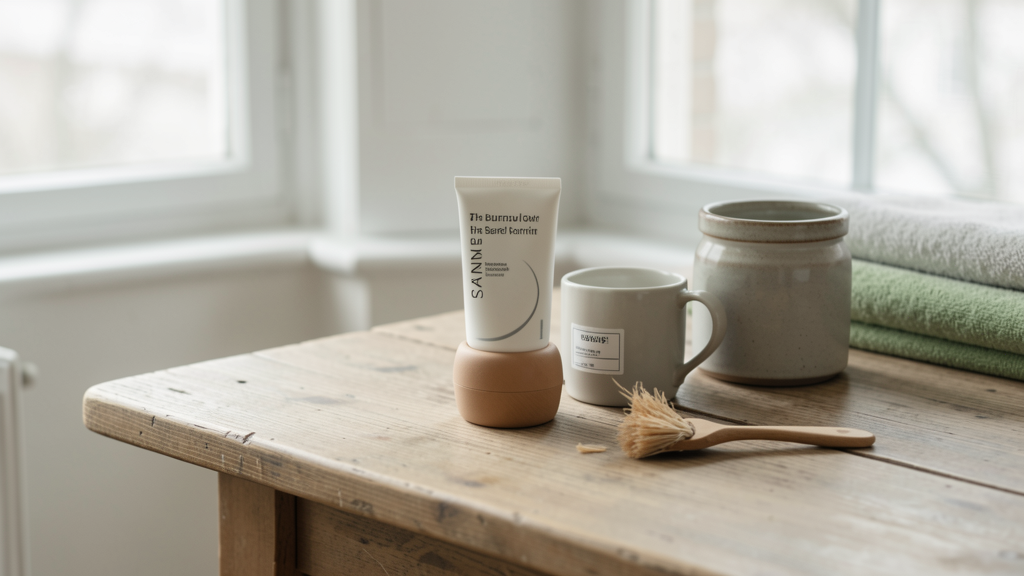
Once the acute stinging subsided, I introduced a three-step protocol that I stuck to religiously for the next six weeks. This wasn't a temporary detox; it became my new permanent routine.
- The Cleanser: I swapped my foaming, high-pH cleansers for a milky, lipid-replenishing lotion containing ceramides. It left my skin feeling soft, not squeaky. "Squeaky clean" is a marketing term for "stripped."
- The Repair: Morning and night, I applied a moisturizer loaded with panthenol (vitamin B5), niacinamide, and centella asiatica. These ingredients are non-negotiable for barrier repair. They calm inflammation and signal the skin to produce more ceramides.
- The Protection: In the mornings, I used a pure mineral sunscreen with zinc oxide. Chemical sunscreens can sometimes irritate compromised skin, but mineral ones act as a physical shield without absorption.
That was it. No toning, no serums, no oils. I watched my shelves of expensive serums gather dust. It felt counterintuitive to do less, but the results were undeniable. The redness began to fade within five days. The peeling stopped by week two. By week four, my skin looked better than it had in years.
The Financial Detox
The most surprising revelation of this experiment wasn't just physical; it was economic. I tallied up my monthly spending on skincare from 2025. I was spending roughly $180 a month on "top-tier" serums, peels, and tools.
By cutting my routine in half, I eliminated the need for $120 worth of products every month. I didn't cancel subscriptions to things I needed; I cancelled subscriptions to things I had been sold. I stopped buying the expensive acid toners and the heavy eye creams that were irritating my lids.
This $120 monthly saving translated to nearly $1,500 a year. That is a significant amount of money that can be redirected toward experiences, travel, or savings. It proved to me that an effective lifestyle does not require a high monthly maintenance fee.
The Parallels in Physical Wellness
This experience reminded me of the lessons we learn about hair care. For years, we strip our hair with sulfates, dry it out with heat, and then coat it in silicones to fake shine. When we stop the washing cycle and let our hair recover, it often finds its natural balance.
Training your hair to need less washing is a similar act of trust. You have to believe that your body is capable of regulating itself if you stop bombarding it with aggressive interventions. My skin barrier recovery was just another form of training. I had to teach my skin that it didn't need to be in a constant state of emergency defense against acids and scrubs.
Identifying the Signs of a Compromised Barrier
If you are reading this and wondering if you are in the same boat I was in last February, here is a checklist of what to look for. A damaged barrier is usually self-inflicted, but it is reversible if you catch it.
- The Sting Test: If products that used to feel fine now sting or burn, your barrier is compromised. The nerve endings are exposed.
- The Texture: Does your skin feel rough like sandpaper, yet look oily? This is often dehydration caused by a damaged barrier, not "oily skin" that needs more scrubbing.
- The Breakouts: Are you getting small, clustered bumps around your nose and forehead? This is often a sign of irritation, not deep acne.
If you see these signs, stop the actives immediately. Do not try to "power through" the peeling. You cannot heal a burn by continuing to apply fire.
Gentle Rituals as Self-Care
I will admit, the hardest part of this transition was the ritualistic aspect. I missed the time I spent in front of the mirror. The ten-minute routine was my moment of Zen. To replace it, I turned to manual, non-chemical ways to care for my face.
I incorporated a gentle facial massage, spending five minutes moving my fingers over my cheekbones and jawline to stimulate lymphatic drainage. This didn't damage my skin; in fact, it reduced puffiness and increased circulation without a single drop of acid. It became my new evening ritual. Later, as my skin healed, I introduced a 3-minute Gua Sha routine to lift and sculpt, but I waited until the redness was completely gone to avoid dragging inflamed tissue.
Shifting focus from "fixing" to "maintaining" changed the energy of my mornings. I was no longer fighting my face; I was comforting it.
A Sustainable Future for My Skin
It has been four months since I reset my routine. My skin is not perfect. I still have visible pores, and I get the occasional hormonal pimple. However, my skin is resilient. It doesn't turn red when I go outside in the wind. It doesn't burn when I try a new moisturizer.
I have since reintroduced one active: a gentle lactic acid lotion, but I only use it once a week, and I never mix it with anything else. I treat it like a dessert, not a main course.
The lesson here extends beyond vanity. It is about recognizing that in a culture obsessed with optimization, sometimes the most powerful move is to step back and do the bare minimum. We are often sold the idea that we need complex systems to survive, whether those systems are productivity hacks, diet fads, or skincare regimens. My damaged skin barrier was a physical manifestation of my belief that I always needed to be doing more to be enough.
Healing it taught me that safety, calm, and consistency are the ultimate luxuries. And they cost a lot less than I thought.