Daily Rituals
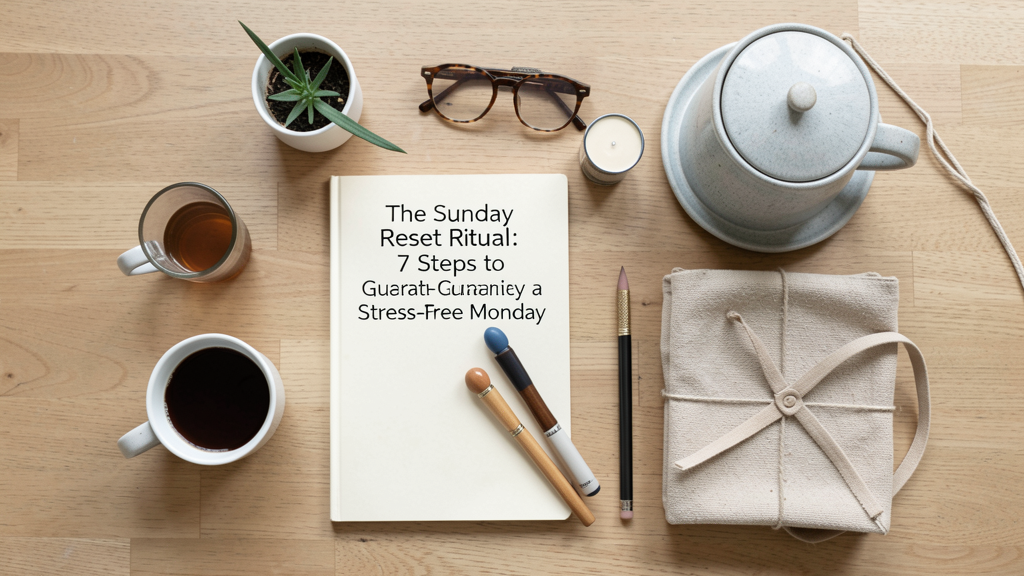
The Sunday Reset Ritual: 7 Steps to Guarantee a Stress-Free Monday
Transform your Sunday evening from a source of anxiety into a strategic launchpad for a serene and organized week.
5 min read
 Practical guides to Lifestyle and inspiration
Challenge the guilt of sleeping in and discover why your biological clock is not a flaw but a strategic advantage for high-performance living.

Editorial image illustrating Beyond the Sunrise: Why Night Owls Are Winning the Productivity Game
For years, the lifestyle echo chamber has preached a singular gospel of success: the early bird catches the worm. We have been sold the idea that waking up at 5:00 AM is the ultimate display of discipline, a moral virtue that separates the high-achievers from the dreamers. As a Travel & Style Editor, I have seen this narrative bleed into every aspect of our lives, from how we structure our Sunday Reset Ritual to the subtle judgment we feel when rolling out of bed at 9:00 AM. It is 2026, yet the guilt of not being a "morning lark" persists for a massive demographic.
The truth is, the obsession with the sunrise is less about productivity and more about performative busyness. For roughly 15% to 20% of the population, the internal clock is simply wired differently. These are the night owls, and their struggle is not a lack of willpower; it is a biological reality. The "5 AM Club" is not a universal key to success; for many, it is a fast track to burnout. It is time we stop apologizing for our peak hours and start structuring a life that honors our unique chronotype.
Myth: Waking up early makes you a better, more disciplined person. Sleeping in means you are lazy.
Reality: Productivity is about energy management, not time management. Your circadian rhythm dictates when you are most alert, and fighting it is counterproductive.
We have conflated wakefulness with virtue. There is a pervasive puritanical streak in modern self-care that suggests suffering—getting out of a warm bed while it is still dark—is the price of admission for a successful life. I recall a specific trip to a boutique hotel in Tuscany last autumn where the breakfast shut down promptly at 9:30 AM. The staff looked at me with pity when I wandered in at 10:15 AM, bleary-eyed and desperate for espresso. I felt that familiar pang of inadequacy, as though my inability to enjoy a 7:00 AM jog on the cobblestones was a personal failing.
Science, however, offers a much kinder narrative. Research into chronotypes shows that "night owls" often have a later peak in their cognitive performance. Forcing an evening type into a 9-to-5 (or a 5-to-9) schedule creates what researchers call "social jetlag." This state of permanent misalignment between your biological clock and the social clock leads to higher cortisol levels and lower life satisfaction. Being productive at 10:00 PM is not "working late"; for a night owl, that is their morning. Judging a dolphin for swimming or a lion for hunting at night seems absurd, yet we judge ourselves for doing the same.
Myth: The morning is the only time for deep work because the world is quiet.
Reality: The late-night hours offer a solitude that the morning simply cannot replicate—a psychological屏障 against the demands of the day.
There is a unique texture to silence at 11:00 PM. In the morning, the silence feels fragile, pregnant with the anticipation of emails, school runs, and the inevitable onslaught of notifications. The morning silence is defensive; you are trying to get work done before the world attacks. Evening silence, however, is earned. It is heavy, secure, and entirely yours.
When the rest of the city has gone to sleep, the psychological pressure to "keep up" evaporates. I wrote the bulk of my last editorial series on sustainable fashion in Paris between the hours of 10:00 PM and 2:00 AM. No Slack pings, no urgent text messages from the marketing team, no快递 dropping packages at the door. Just pure, unadulterated focus. This is where Visual Cues in your environment become even more potent; a dark room with a single focused light source naturally narrows your attention span, creating a tunnel of productivity that is hard to replicate in the bright, diffuse light of day.
Myth: Anyone can become a morning person if they just try hard enough with the right routine.
Reality: You can shift your rhythm slightly, but you cannot fundamentally rewire your genetics without a cost to your health.
The wellness industry loves a good biohack. We are told that cold exposure, blue-light blocking glasses, and strict sunrise alarms can turn us into morning people. While behavioral interventions can help adjust your sleep window by about an hour or so, they cannot turn a genetic night owl into a morning lark. I tried this relentless optimization in early 2025. I committed to a 5:30 AM wake-up call for a month, convinced that my fatigue was just "mindset weakness." The result? I was irritable, my skin broke out, and my creative output plummeted. I was awake, sure, but I was certainly alive.
Listen to your body. If your brain feels foggy until noon but suddenly sparks into gear at 4:00 PM, that is not a defect to be fixed. It is a signal. Instead of fighting your biology with aggressive alarms, consider shifting your "start of the day" to whenever you naturally feel alert. If you work for yourself or have a flexible role, lean into that. If you are in a rigid office environment, negotiate a later start time or stack your most menial tasks for the morning fog and save the high-stakes decision-making for when your brain lights up. If your evenings feel chaotic, How I Fixed My Broken Evening Routine by Stacking 'Micro-Habits' might offer a framework for bringing order to your nights, but the goal should be optimization, not obliteration of your nature.
Myth: Sleeping until 10:00 AM means you waste half the day and miss the "beauty" of the morning.
Reality: The world at night offers a cinematic, sensory-rich experience that early risers sleep right through.
The argument that night owls "miss out" is predicated on the assumption that the day has more value than the night. This is a subjective bias. The morning has birds and sunrise, yes, but the night has the hum of the city, the reflection of streetlights on wet pavement, and a sense of camaraderie among the other awake souls. There is a specific intimacy in being awake while the rest of the world dreams. It feels like a secret club.
During a recent stay in Tokyo, I explored the Shinjuku district at 1:00 AM. The energy was electric but distinct from the frenetic pace of the morning rush. It was cooler, calmer, yet vibrant. I felt more inspired in those two hours of walking than I had in the previous three days of standard sightseeing. Even if you aren't traveling, your own neighborhood transforms at night. The quiet streets allow for a different kind of thinking—wandering, associative, and free. You aren't missing the day; you are experiencing a parallel dimension of it that others are too asleep to notice.
We must dismantle the hierarchy of time. Success is not owned by the alarm clock. Whether you are closing a deal at 8:00 AM or sketching a design at 2:00 AM, the value lies in the work, not the hour on the clock. The most stylish, conscious way to live is not to mimic the routines of CEOs or influencers who have different biological needs than you. It is to curate a schedule that allows you to show up as your best self.
If you find yourself staring at the ceiling at 4:00 AM, brimming with ideas, stop apologizing for it. Build a sanctuary for that wakefulness. Invest in blackout curtains, dimmable lights, and a ritual that honors your rhythm rather than suppresses it. The "5 AM Club" has its merits for some, but for the rest of us, the "10 PM Club" is where the magic happens. Embrace your late-night bloom, and let the early birds have the worms; we are busy creating the future while they sleep.
Transform your Sunday evening from a source of anxiety into a strategic launchpad for a serene and organized week.
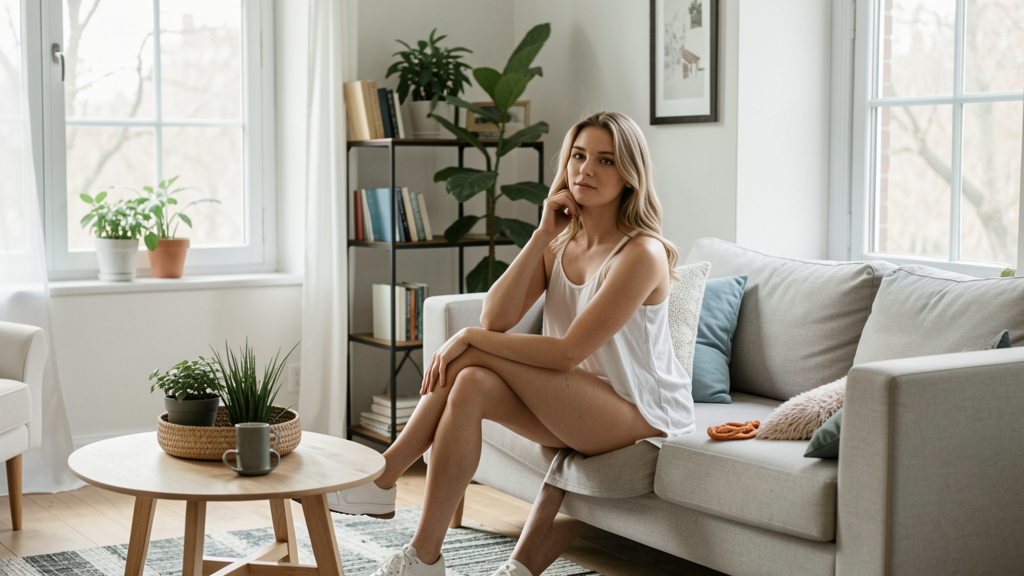
I stopped trying to overhaul my life at 9 PM and started stacking 30-second actions onto existing triggers to finally catch some sleep.