
Daily Rituals
Why I Abandoned the 10-Step Routine for One Sticky Habit
I stopped trying to overhaul my life at 9 PM and started stacking 30-second actions onto existing triggers to finally catch some sleep.
8 min read
 Practical guides to Lifestyle and inspiration
Stop relying on willpower and start curating your space to trigger hydration automatically through the psychology of sight-lines.
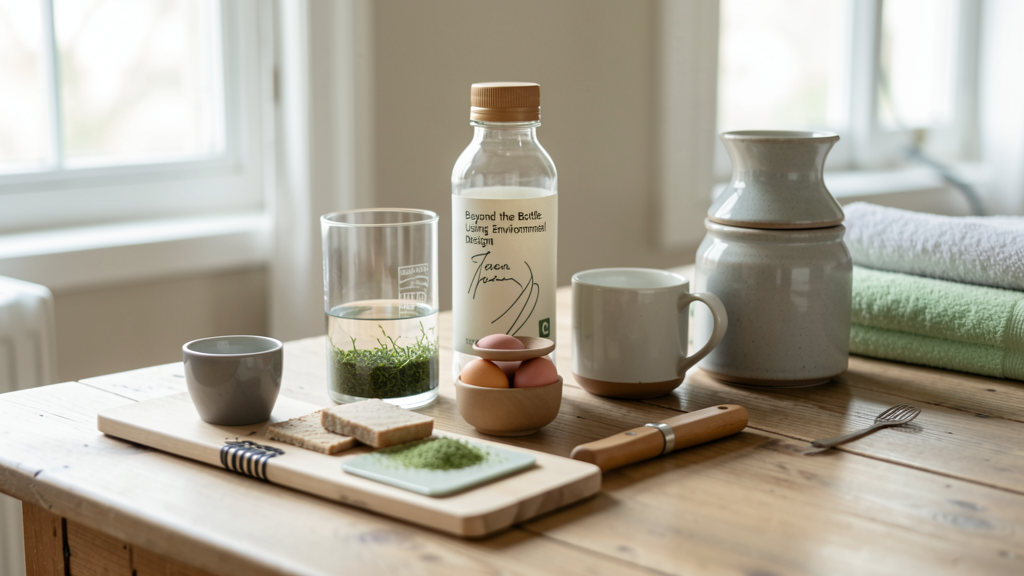
Editorial image illustrating Beyond the Bottle: Using Environmental Design to Hack Your Thirst
Last Tuesday, I found myself rubbing my temples at 4:00 PM, the dull throb of a dehydration headache settling behind my eyes. I had not eaten anything processed, I slept eight hours, and I had a calm morning. Yet, I felt drained. The culprit was not a lack of availability; my kitchen was full of filtered water. The problem was that my water bottle was inside my tote bag, zipped away under my desk, while my eyes were fixed on my computer screen. I had fallen into the classic trap of "out of sight, out of mind."
We often treat hydration as a test of character, believing that if we just cared enough about our health, we would remember to sip. This is a misunderstanding of human psychology. We are not rational calculators who constantly monitor our biological needs. We are visual creatures. If you are struggling with fatigue or brain fog, the issue is likely not your willpower but your interior design. To fix this, we need to manipulate your environment so that drinking water becomes the path of least resistance.
Behavioral psychologists often refer to "friction" as the effort required to perform an action. High friction stops us from doing things; low friction encourages them. When your water is stored in a cupboard, inside a cabinet, or worse, a closed bottle in a bag, the friction to access it is too high. Your brain, busy processing emails and creative tasks, will not prioritize the extra steps of opening a bag or unscrewing a cap unless the thirst signal is screaming.
This phenomenon is closely linked to the concept of the "proximity effect." In 2026, with our attention spans fractured by notifications, we gravitate toward what is immediately visible. If a healthy option is placed within arm's reach, consumption increases significantly. The inverse is also true: when snacks are hidden, we eat less. By curating what enters your visual field, you bypass the need for motivation entirely. You stop deciding to drink water and start doing it simply because it is there.
Take a moment to look at your workspace right now. What is directly in your line of sight when you look up from your screen? Is it a stack of papers, a coffee cup, or a blank wall? If you work from home, your sight-lines are entirely within your control, yet many of us use them for clutter rather than inspiration.
A "sight-line" is the unobstructed line of view from your eyes to a specific point in your environment. If your sight-line falls on a coffee mug, you will reach for caffeine. If it falls on a beautiful glass of water, you will hydrate. This is why 4 Signs Your 'Work From Home' Transition Ritual Isn't Working often includes a lack of functional aesthetics. Your home office should be designed to cue healthy behaviors.
To optimize this, identify your "focal points"—the places your eyes rest naturally during the day. For me, it is the corner of my mahogany desk, just to the right of my monitor. I cleared that space of all non-essentials. No charging cables, no sticky notes. I placed a heavy-bottomed crystal glass there. Now, every time my gaze drifts away from the screen, I am reminded to take a sip. It is a passive nudge that requires zero active memory.
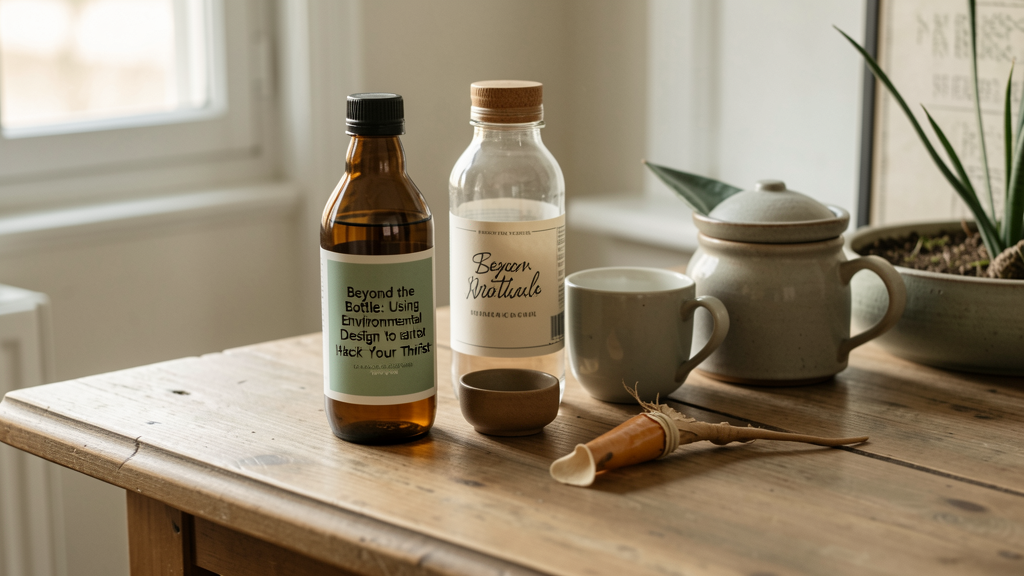
Here is where my editor's perspective on style becomes practical. We drink with our eyes first. If you are drinking water out of a stained, plastic sports bottle, you are subconsciously associating the act of hydration with "utility" or "exercise." That is fine for the gym, but for a lifestyle of elegance and ease, the vessel must elevate the experience.
Switching to a beautiful glass or a ceramic carafe changes the category of the beverage. Water stops being a chore and becomes a sensory experience. I recently swapped my stainless steel tumbler for a hand-blown turquoise glass. The color alone catches the light, drawing my attention. The condensation on the outside provides tactile feedback. The open rim invites a deeper breath. These sensory details signal to my brain that this is a moment of self-care, not just a biological necessity.
This ties directly into the concept of micro-habits. When I was fixing my broken evening routine by stacking 'micro-habits', I realized that the aesthetic appeal of an object can trigger a routine. A beautiful book makes me want to read; a beautiful glass makes me want to drink. Do not underestimate the power of a pretty vessel. It is a visual cue that works on your emotional center, not just your logical brain.
Implementing these changes requires a shift in how we view our living spaces. We must treat our homes as active partners in our well-being rather than static backdrops. The best time to establish these visual triggers is during your weekly planning. I use The Sunday Reset Ritual: 7 Steps to Guarantee a Stress-Free Monday to strategically place water pitchers in key locations.
Every Sunday, I fill three glass carafes. One goes on my bedside table for the morning, one on my desk for the workday, and one on the coffee table for the evening. When I wake up groggy on Monday, the water is the first thing I see. There is no decision-making involved. I do not have to walk to the kitchen. The environment has already done the work for me.
This ritual might seem like extra labor initially, but consider the trade-off. You are spending ten minutes on Sunday to save yourself from hours of fatigue and headaches during the week. You are outsourcing your memory to your interior design. It is a conscious choice to prioritize efficiency and health by manipulating the physical world around you.
Ultimately, staying hydrated is not about downloading a tracker app or setting an alarm that you will eventually snooze. It is about designing a life where the healthy choice is the obvious one. By aligning your sight-lines with your goals and choosing vessels that spark joy, you turn hydration into a seamless part of your daily rhythm.
Look around your space again. That empty spot on your desk or that bare shelf is not just vacant space; it is an opportunity to cue a better habit. Fill it with something clear, cool, and inviting. Let your environment do the remembering, and save your mental energy for the creative work that truly matters. When your surroundings reflect the vitality you want to feel, your body naturally follows suit.

I stopped trying to overhaul my life at 9 PM and started stacking 30-second actions onto existing triggers to finally catch some sleep.
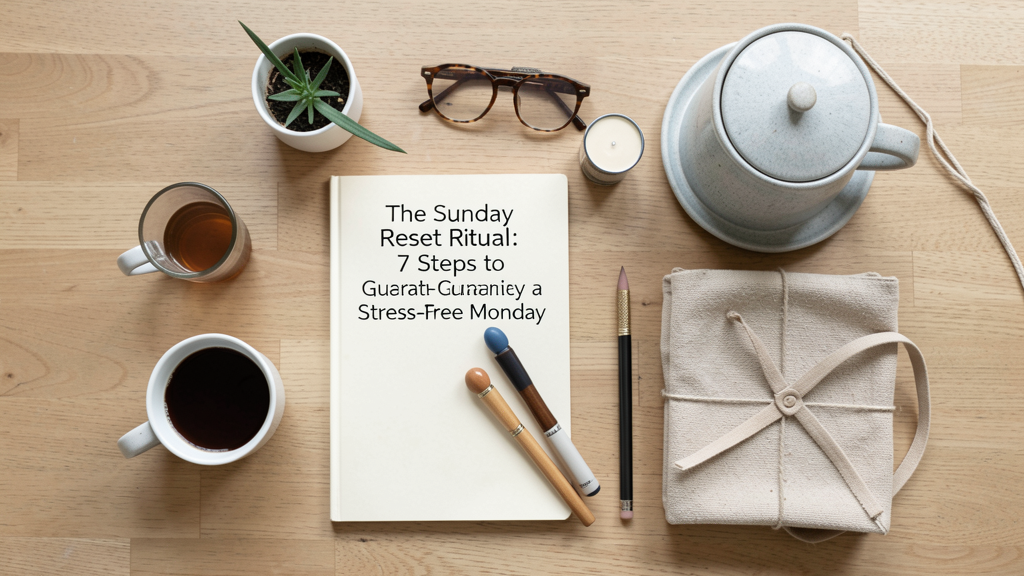
Transform your Sunday evening from a source of anxiety into a strategic launchpad for a serene and organized week.